
Are Blotting Papers Good for Acne-Prone Skin?
A careful guide to using blotting paper for visible oil when your skin is breakout-prone, reactive, or already wearing makeup.
Last updated: 2026-07-07
Quick answer
Blotting papers can be useful for acne-prone skin when you use a clean sheet, press gently, and avoid rubbing active breakouts. They help manage visible surface oil, but they do not treat acne or replace cleansing and skincare.
Quick product match
Best product path for acne-prone oily skin
For acne-prone oily skin, start with the least complicated path: Bamboo Charcoal for unscented surface oil control, Mirror Case when you need to check specific shiny areas away from home, and the products page when you want to compare sheets, compact cases, scent, sheet count, and checkout options together.
If your skin tolerates scent and you prefer a fresher carry option, compare Green Tea. If your routine includes makeup or powder, compare Puff Case as a compact blot-first format.
The honest answer for acne-prone skin
Blotting paper can be helpful for acne-prone skin because it removes visible surface oil without asking you to wash your face again or add another layer of powder. That makes it useful during school, work, travel, workouts, and makeup days.
But blotting paper is not an acne treatment. It does not clear clogged pores, replace a cleanser, or replace proven skincare. Think of it as a clean daytime oil-control step, not a cure.
Why technique matters more than force
Acne-prone skin often needs less friction, not more. Rubbing can make the surface look more irritated, especially around active blemishes or textured makeup.
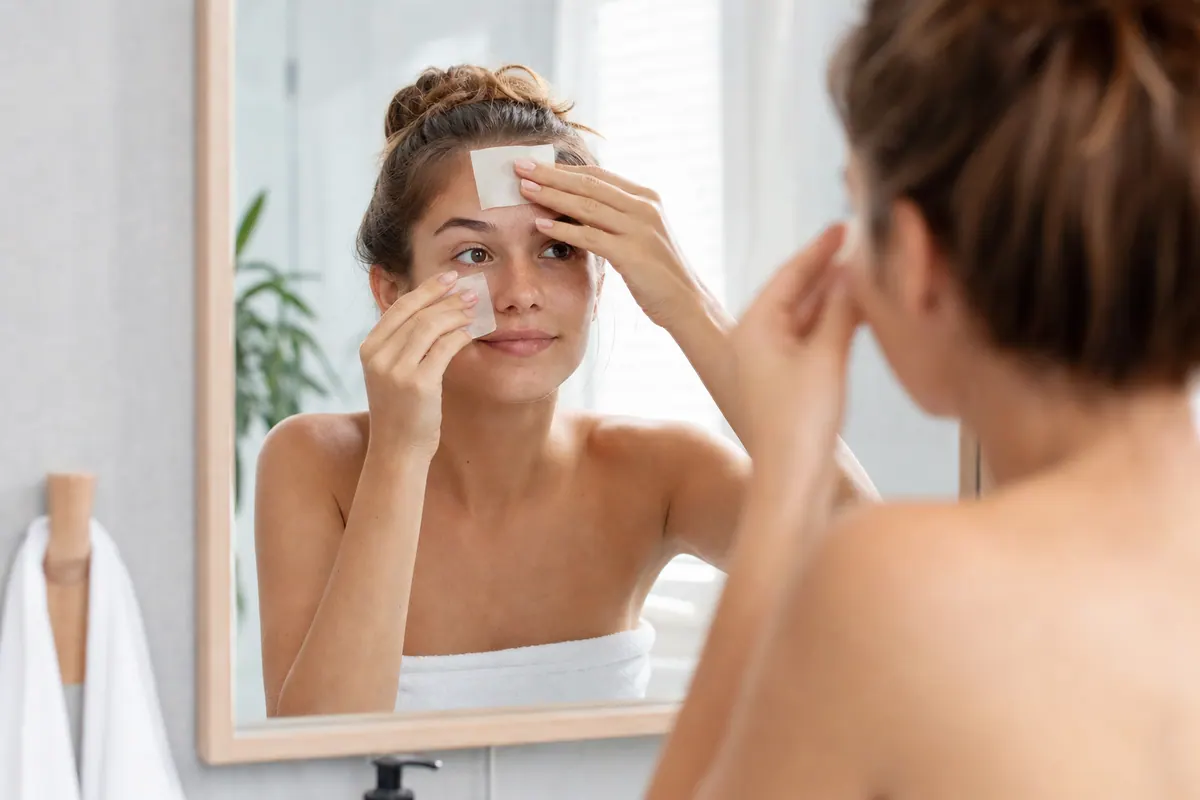
The safest routine is a light press-and-lift motion. Let the paper contact the shiny area for a few seconds, then lift it away and throw it out.
Quick product match for acne-prone routines
If your skin is easily irritated, start with an unscented option and a simple routine. Bamboo Charcoal is the best first product path when the main concern is visible surface oil plus sensitivity to fragrance.
If the concern is touching the wrong spot, a compact mirror helps. You can check whether the shine is actually on the forehead, nose, or chin before pressing a sheet.
How to blot acne-prone skin
- Start with clean hands. This reduces unnecessary transfer before touching your face.
- Use one fresh sheet. Never reuse a sheet after oil has transferred to it.
- Press only on visible shine. Focus on the forehead, nose, chin, or upper cheeks.
- Avoid hard pressure on inflamed spots. Blot nearby oily areas instead of scraping over painful blemishes.
- Lift straight off. Do not drag the sheet across makeup, sunscreen, or texture.
When blotting helps most
- Before powder so makeup touch-ups do not build up over oil.
- During school or work when washing your face is not practical.
- After sunscreen has settled if the T-zone looks glossy but you do not want to rub the SPF layer.
- Before photos or video calls when forehead, nose, or chin shine catches light.
- After light workouts once sweat has been patted away with a clean towel.
What blotting paper cannot do
- It cannot treat acne. Use acne care recommended by your dermatologist or trusted skincare professional.
- It cannot replace cleansing. Wash your face as part of your normal routine, especially after sunscreen, makeup, or heavy sweat.
- It cannot remove everything in pores. It mainly lifts surface oil.
- It cannot make rough rubbing safe. Gentle pressure matters more than trying to absorb every trace of oil.
- It cannot make a reused sheet hygienic. Use it once, then discard it.
Blotting paper vs powder for acne-prone makeup
Product links and related reading
For a simple fragrance-free option, start with Bamboo Charcoal. If your skin tolerates a light fresh option, compare Green Tea. For controlled checks away from home, see Mirror Case. Compare every format on the PleasingCare products page.
Related reading: best blotting paper for sensitive skin, can you use blotting paper without makeup, how often should you use blotting paper, can blotting paper replace washing your face, and blotting paper vs tissue.
For makeup days, read should you blot before powder, how to use blotting paper over foundation, and how to control oil without ruining makeup.
FAQ
Are blotting papers good for acne-prone skin?
They can be useful for managing visible surface oil when used gently with a clean sheet. They are not an acne treatment and do not replace cleansing, skincare, sunscreen, or professional advice.
Can blotting paper cause acne?
A clean blotting sheet is unlikely to cause acne by itself. Problems are more likely when a sheet is reused, rubbed across the face, pressed hard on inflamed spots, or used instead of cleansing.
Which PleasingCare option fits acne-prone oily skin?
Bamboo Charcoal is the simplest unscented choice for stronger-looking surface oil. Mirror Case helps you blot only shiny areas when you are away from home.
Should I blot directly on active breakouts?
Avoid pressing hard on inflamed or painful spots. Blot nearby shiny areas lightly, lift straight off, and use a fresh sheet for each touch-up.
Is blotting paper better than adding powder on acne-prone skin?
Often it is the cleaner first step for visible oil. Blotting removes surface shine before powder, so makeup touch-ups can stay lighter.
Keep acne-prone touch-ups clean and light
Compare PleasingCare Bamboo Charcoal, Green Tea, Mirror Case, Puff Case, and sheet packs for gentle daytime oil control.