
Blotting Paper vs Tissue for Oily Skin | Which Is Better?
Tissue paper can work in a pinch, but blotting paper is the cleaner everyday choice for oily skin, makeup days, sunscreen shine, and quick shine control.
Last updated: 2026-07-07
Quick answer
For blotting paper vs tissue paper, use tissue only as an emergency backup. Blotting paper is better for daily oily-skin touch-ups because it lifts surface oil with less rubbing, less residue risk, and a lower chance of disturbing sunscreen or makeup.
Quick product match
Quick product match vs tissue
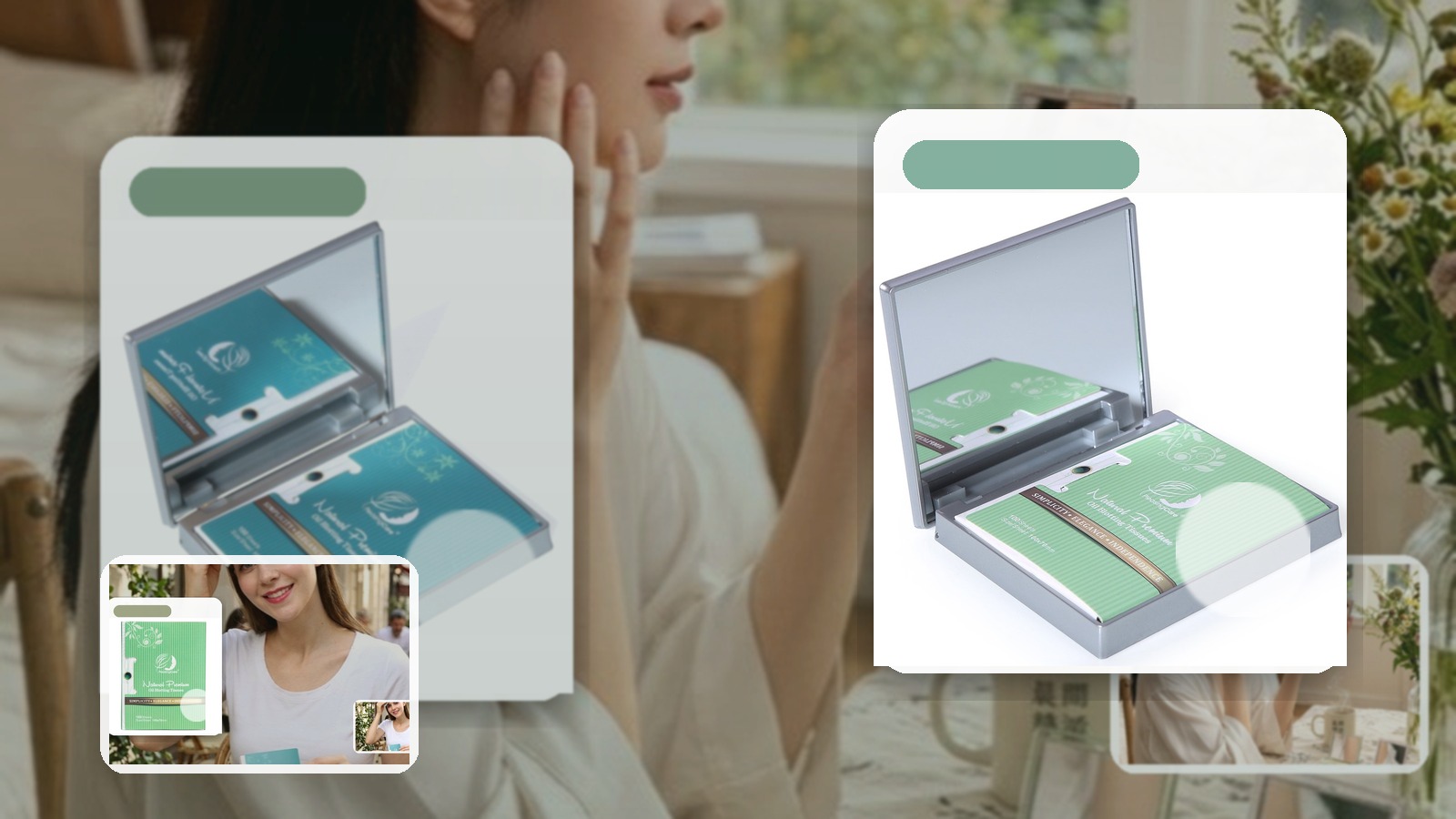
If tissue is your current backup, upgrade to Mirror Case for a slim compact with a mirror, Bamboo Charcoal for unscented daily sheets, or Green Tea if you prefer a lighter fresh carry. Compare every format on the PleasingCare products page.
The quick difference
Tissue paper and blotting paper can both touch oily skin, but they are built for different jobs. Tissue is made to be soft and disposable for general use. Blotting paper is made to lift surface oil from skin with a light press.
That difference matters when you are oily at work, school, before photos, after sunscreen, or over makeup. Tissue paper is a backup. Blotting paper is the cleaner everyday tool.
Best short answer
For blotting paper vs tissue paper, choose blotting paper for normal oily-skin touch-ups and keep tissue only for emergencies. Blotting paper is easier to press without rubbing, is less likely to leave fuzzy residue, and is more predictable over sunscreen or makeup. If you want a clean tissue replacement, compare PleasingCare sheet packs and compact cases on the products page.
Best product choice instead of tissue
For most everyday oily-skin touch-ups, start with Bamboo Charcoal because it is unscented, simple, and purpose-built for press-and-lift oil control. Choose Mirror Case if your real problem is carrying loose tissues in a purse, backpack, desk drawer, or car console.
If you want to compare the cleanest tissue replacement for your routine, use the PleasingCare products page to review sheet packs, fresh-scent options, Mirror Case, Puff Case, and direct checkout choices together.
Tissue replacement product paths
Blotting paper vs tissue at a glance
Why tissue is only an emergency backup
Tissue can help if your forehead is shiny and you have no blotting paper nearby. The problem is consistency. Many tissues are designed to soften, break down, or shed fibers when they pick up moisture and oil.
On oily skin, those fibers can stick to sunscreen, foundation, sebum, or moisturizer. If you wipe instead of press, tissue can also move makeup and make the finish look patchy.
Why blotting paper works better for daily shine
Blotting paper is a better default because it is meant for one job: remove visible surface oil without washing your face or adding another makeup layer.
Use a clean sheet, press on the shiny area, hold briefly, then lift. That simple motion is why blotting paper works well before powder, before photos, before meetings, after commuting, or when sunscreen makes the T-zone look too shiny.
- It is easier to use without rubbing.
- It adds no color, powder, or heavy finish.
- It fits work bags, school bags, travel pouches, and compact cases.
- It pairs well with Mirror Case when you need a quick shine check.
- It is simple enough for bare skin, sunscreen days, and makeup days.
Cost per use is closer than it looks
A box of tissues looks cheaper at first. But for oily-skin touch-ups, one tissue often gets folded, refolded, or replaced because it becomes damp or fuzzy. A blotting sheet is smaller but purpose-built, so one sheet can often handle the forehead, nose, and chin.
If you blot several times a day, the better question is not only cost. It is whether the touch-up stays clean, quick, and makeup-safe. For many people, blotting paper wins because it reduces the chance of over-wiping or adding powder too soon.
If you must use tissue, do it this way
- Fold the tissue into a flat pad. A thicker surface is less likely to tear immediately.
- Press only on shiny areas. Focus on forehead, nose, and chin.
- Do not wipe. Wiping creates friction and can disturb makeup.
- Use a fresh section quickly. Do not keep pressing the oily area back onto your face.
- Switch back to blotting paper when available. Tissue is a backup, not a daily routine.
Which PleasingCare option replaces tissue in your bag?
For fragrance-free daily shine control, start with Bamboo Charcoal. For a light fresh scent, compare Green Tea. If loose tissues are currently your purse or backpack backup, Mirror Case is the strongest upgrade because it adds a mirror and 100 sheets in one slim compact.
For a more polished makeup touch-up, compare Puff Case. To see all sheet packs, compact cases, scents, and multipacks together, use the PleasingCare products page.
Related comparison and routine guides
If your real question is whether to blot or add makeup, read blotting paper vs powder and should you blot before powder. For makeup concerns, use will blotting paper remove makeup and how to control oil without ruining makeup.
For bigger routines, visit the comparison hub, oily skin routine hub, and makeup touch-up guide.
FAQ
What is the difference between blotting paper and tissue paper?
Blotting paper is made for press-and-lift oil control on the face. Tissue paper is a general backup that can absorb some oil, but it may tear, leave fibers, or move makeup if you wipe.
Can I use tissue instead of blotting paper?
You can use tissue in an emergency, but it is not the best everyday option. Tissue can tear, leave fibers, and move makeup if you rub. Blotting paper is designed for press-and-lift oil removal.
Is blotting paper better than tissue for oily skin?
Yes, for most oily-skin touch-ups. Blotting paper lifts surface oil without adding product and without breaking apart as easily as tissue.
What should I use instead of tissue for oily face shine?
Use oil blotting paper when you can. It is easier to press on the T-zone without wiping, tearing, or leaving tissue fibers on sunscreen or makeup.
Is tissue paper bad for oily skin touch-ups?
Tissue paper is not automatically bad, but it is less predictable for oily-skin touch-ups. Use it only in a pinch, press gently, and switch back to blotting paper when you can.
Will tissue remove makeup?
Tissue can disturb makeup if it is rubbed, dragged, or pressed too hard. If you must use tissue, fold it, press gently, and lift instead of wiping.
Does blotting paper clean pores?
No. Blotting paper removes surface oil and shine. It does not cleanse pores, replace face washing, or treat acne.
Which PleasingCare format should replace loose tissues in a bag?
Choose Mirror Case for a slim compact with 100 sheets and a mirror, Bamboo Charcoal for unscented daily use, Green Tea if you prefer a light fresh scent, or the Products page to compare every tissue-replacement format together.
What is the best product choice instead of tissue for oily skin?
For most people, Bamboo Charcoal is the simplest unscented tissue replacement. Mirror Case is better if you want a compact with a mirror, while the Products page helps compare sheet packs, scents, and compact formats.
Replace loose tissues with a cleaner touch-up format
Compare PleasingCare Bamboo Charcoal, Green Tea, Mirror Case, Puff Case, and sheet packs before choosing your everyday tissue replacement.