You’ve been wearing your makeup since 7:30 in the morning. It’s now 2:00 in the afternoon, and your T-zone is starting to betray you. You reach for your powder compact, press it onto your forehead and nose, and immediately watch your foundation look less like skin and more like, well, a paint-by-numbers version of your face. Sound familiar?
Here’s the thing: the issue isn’t that your makeup was applied wrong this morning. It’s that powder—whether it’s a pressed setting powder or a loose translucent formula—isn’t the right tool for mid-day corrections. Adding more powder over already-worn makeup creates buildup, emphasizes texture, and gives you that dreaded cakey look that often takes more effort to fix than the original shine ever did.
There is a better way. Blotting paper is the makeup touch-up tool that actually respects the work you put in earlier. It removes oil, restores a matte finish, and does it all without disturbing a single layer of foundation, concealer, or contour. In under a minute, your face looks freshly applied—without looking like you just powdered it.
Oil is the enemy of matte makeup. Not because oil is bad for your skin—it’s completely normal, necessary, and healthy—but because oil sitting on top of your foundation creates a slippery surface that breaks down product throughout the day. By early afternoon, the oil has essentially dissolved the adhesive quality of your foundation, and now you’re shiny in places you were matte this morning.
Most people respond to this by reaching for powder. And powder does work—it’s just that it works by adding more layers on top of the problem. If your foundation has already shifted or thinned in oily areas, powder settles into the gaps and makes everything look heavier and flatter. You end up with a face that’s technically matte but visually obvious that you’ve been touching up. The coverage you wanted isn’t there anymore—just powder sitting on top of product that’s already moved.
The real fix is to remove what’s causing the problem: the oil itself. Once oil is off the surface, your remaining makeup actually looks better. It’s still there, still covering, just no longer fighting against a slick layer of sebum. This is exactly what blotting paper does, and it does it in seconds without adding a single new layer.
There’s another factor worth knowing about. Sometimes makeup breaks down because of what you’ve put on underneath it—your morning moisturizer, your primer, your skincare routine. If you’re using a rich cream and then applying makeup on top of it before it’s fully absorbed, that product will continue to “breath” through your foundation throughout the day, bringing oil with it. Blotting paper addresses the surface symptom beautifully, but if you notice consistent, rapid oil production every single day, it might be worth evaluating your morning skincare timing or product weight as a complementary step.
Here’s where it gets practical. The technique matters almost as much as the tool itself. Swiping blotting paper across your face the way you’d wipe a spill will smear makeup instead of absorbing oil. It’s a subtle difference, but it changes everything.
Step 1: Choose the right area. The T-zone—forehead, nose, and chin—produces the most oil for most people. Cheeks can also get shiny, especially near the apples of the cheeks and along the bone. Don’t assume every part of your face needs attention. Check your reflection and focus on where you actually see or feel shine.
Step 2: Press, don’t swipe. Place the blotting paper against the oily area and hold it there for 3 to 5 seconds. This is long enough for the paper’s absorption properties to actually pull oil from the skin surface. Then lift it straight away. Don’t drag it across your skin. You’ll usually see a slight translucency where the oil was absorbed—some brands show this more than others, but the effect is there.
Step 3: Discard and move on. One sheet per oily area is plenty. Reusing a sheet that’s already absorbed oil just redistributes it back onto your skin. Fresh sheet each time.
Step 4: Assess before doing anything else. After blotting, look at your skin. In most cases, you’ll find that your makeup looks essentially restored—just matte and even again. You may not need to add more product at all. If there’s a specific spot that genuinely needs concealer—a blemish that peeked through, a redness area that got exposed—dab a tiny amount with your fingertip and blend gently. Less is more here.
The whole process takes about 30 seconds once you’re practiced at it. And unlike powder, there’s no careful blending required afterward. The paper does the work. You just lift it away.
Blotting paper isn’t just for mid-day corrections. You can incorporate it strategically at different points in your makeup application routine for better results overall.
If you have very oily skin and tend to get shiny within an hour of applying foundation, a quick pre-foundation blot can help extend your wear. After your skincare products have fully absorbed—give it about 3 to 5 minutes after your last product—press a sheet gently over your T-zone to remove any residual oil sitting on the skin surface. Then apply primer and foundation. This gives your foundation a drier, cleaner surface to grip onto, which can genuinely extend its wear time by an hour or two.
That said, this step isn’t necessary for everyone. If your skincare absorbs well and you don’t notice shine appearing within the first couple hours, skip it. Over-blotting before makeup can actually make your skin too dry, which causes foundation to look cakey in a different way—settling into fine lines and dry patches instead of sitting smoothly. Know your skin and adjust accordingly.
If you’re using a liquid or cream foundation and want to set it without powder, you can do a light blot 2 to 3 minutes after application. This removes any slight tackiness that hasn’t fully absorbed—again, not a lot, just the residual product sitting on the surface—and creates a natural matte finish as a base for the rest of your makeup. This technique works particularly well if you’re someone who finds powder gives you a too-heavy or too-flat look. Blotting after foundation creates that clean, matte canvas without flattening your face.
This is the main event. At some point between noon and 4:00 PM—depending on your schedule, your skin type, the weather, and what you’ve been doing—you’ll notice shine returning. That’s your signal to blot. Don’t wait until you’re visibly oily to the point where it’s bothering you. Blotting earlier means less oil has built up and the correction is faster and less noticeable. You’re essentially nipping the problem in the bud.
If you’re heading from work to dinner, a date, or any evening event and you want a fresh-start feeling, blot first, then assess whether any areas need a light concealer touch-up. You might be genuinely surprised how much better your makeup looks with just the oil removed, without any additional product applied. Often your makeup has simply shifted and faded slightly, not actually broken—removing the oil reveals what’s still there underneath, looking almost as good as when you first applied it.
This comes up constantly, and the honest answer is that it depends entirely on when and why you’re using each one. They’re not interchangeable. They do different things.
Setting powder is excellent in the morning as a base layer. If you’re using a medium-to-full coverage foundation and you want to lock it in place, a light dusting of setting powder—especially in your T-zone and anywhere you applied concealer—creates a smooth, long-wearing foundation for the rest of your makeup. Powder works best as a preventive measure. It’s applied once and does its job over the hours that follow.
Blotting paper is the correction tool. It fixes a problem that has already happened—oil has accumulated on the surface, and now you need to remove it without disturbing the makeup underneath. Blotting paper doesn’t add coverage or any product at all. It restores the matte finish that oil has disrupted, essentially pressing the reset button on your look.
Trying to use powder as a mid-day correction tool—adding more to touch up when you’re shiny—rarely produces the result you want. You can test this yourself: the next time you get shiny in the afternoon, instead of reaching for your powder compact, try blotting first. Press for 3 to 5 seconds, lift, and look. Then compare that result to what powder alone would have given you. The difference in how natural and skin-like your makeup looks is usually quite striking.
One practical approach that works well for many people is to use both: set your makeup with powder in the morning, especially if you know you’ll be wearing it for a long time or in a warm environment, and then carry blotting paper for the inevitable mid-day correction. The powder slows down initial oil production and the blotting paper handles whatever does break through, preserving your look without adding layers.
Some people prefer to skip powder entirely and rely only on blotting paper for oil control throughout the day. This works particularly well for those who find powder gives them a too-heavy, too-flat, or too-matte look—sometimes you want to retain more of your skin’s natural luminosity and dimension. Without powder, your skin looks more like skin, and blotting paper simply keeps oil from disrupting that finish. Either approach is valid; find what works for your face and your preferences.
Certain areas of the face require a little more care and specificity when you’re touching up, because the skin is thinner or the makeup application is more complex.
The skin on your eyelids is some of the thinnest on your entire body, which means it produces oil more noticeably and absorbs products differently than the rest of your face. If you wear eyeshadow, eyeliner, or mascara, a heavy-handed touch near that area risks smudging everything you’ve carefully applied.
The solution is to use a smaller piece of blotting paper. Fold a full sheet in half, then in half again, and use the corner or edge to press gently on the outer corner of your eyelid and the area just below your brow bone. Avoid pressing directly on the eyelid line where eyeshadow and liner live. Hold for 3 to 4 seconds, lift, and check. Most of the time, this is enough to reduce shine in the eye area without disturbing anything else. If you wear eyeshadow regularly, this technique is genuinely transformative—it’s the difference between maintaining a full eye look all day versus needing to rebuild it every few hours.
If your eyelids are consistently oily to the point where eyeshadow starts creasing within a couple hours even with primer, look for an eyelid primer specifically formulated for oily lids. Apply it before your eyeshadow and give it a full minute to set completely before adding shadow on top.
The nose is often the oiliest part of the entire face because it has a high concentration of sebaceous glands—it’s part of why,鼻子上黑头也最明显. It also tends to be where makeup settles into pores and fine lines most obviously—between the nostrils, along the bridge, and on the sides of the nose.
When you blot your nose, press the blotting paper flat against the bridge and sides rather than trying to fit it into every contour with a rubbing motion. One firm press for 4 to 5 seconds on the bridge, then a fresh sheet on each side if needed. Don’t reuse the same sheet on both sides—you want each application to be with a fresh, dry sheet that’s actively absorbing. Some people also gently press the tip of the nose, though this area tends to produce less oil than the bridge.
The forehead can be tricky because it’s flat but wide, which means oil spreads across a large area. A single sheet of blotting paper usually isn’t enough to cover the whole thing effectively. Fold a sheet into a small rectangle and work from center outward, pressing in overlapping sections. You don’t need to apply significant pressure—just hold the paper in place and let the absorption happen.
If you have bangs and they get oily at the roots—which is especially common in humid weather or if you use hair products—this area often gets overlooked but can make your whole face look shinier than it actually is. Lift your bangs and press a folded sheet against your hairline, holding for 3 to 4 seconds.
The chin often gets overlooked in conversations about oil control, but it’s another area where oil accumulates throughout the day, particularly if you’ve been eating, drinking, talking constantly, or touching your face. Blot it gently without rubbing the sides of your jaw, which can disturb bronzer or contour. A quick press in the center of the chin is often all that’s needed.
Cheek oil is sneaky because it often shows up in photos before you notice it in the mirror—professional lighting catches shine instantly. By the time you feel oily on your cheeks, there’s already a decent amount of oil sitting on the surface. Press a full sheet flat against the apple of each cheek for 3 to 4 seconds. If you’re wearing cream highlight and notice it sliding or fading first, that’s your cue that cheek oil is building up.
One thing to note: if you apply cream or liquid highlight on your cheeks, blotting should be done before that product goes on, not after. Once cream products have been applied and blended, pressing on them even gently can disrupt the application. Save cheek blotting for before your cream highlight step.
Keep a compact or pack in your purse or bag for on-the-go touch-ups. At home or at your office desk, a loose pack works fine. Blotting paper doesn’t expire, but keeping it clean and dry is important. Don’t store it somewhere damp like a bathroom vanity, which can compromise the paper’s absorption quality over time—noticeably, in fact, because damp blotting paper won’t absorb oil the same way. A makeup bag, desk drawer, or the inner pocket of a purse is ideal.
No. Standard tissue paper is designed to dissolve and break apart when it gets wet—it doesn’t have the absorption capacity or structural integrity to remove oil efficiently without leaving fibers behind on your face. Blotting paper is specifically processed to absorb oil quickly while staying intact and fiber-free. The difference in results between tissue and actual blotting paper is significant and immediate. You’ll notice it the moment you try it: tissue crumbles and leaves residue, blotting paper lifts cleanly away with the oil absorbed inside it.
Blotting paper is most beneficial for combination and oily skin, but it can also help someone with dry skin who wears heavy makeup and notices product breaking down from environmental factors like heat and humidity. If you have very dry skin and don’t typically get shiny anywhere, you probably don’t need to blot regularly—but having a sheet or two available for unusual situations isn’t a bad idea.
For most people wearing makeup through a standard morning-to-evening schedule, 2 to 4 sheets per day covers a typical routine. One sheet per touch-up session per oily area is sufficient. If you’re using significantly more than that—say, a full pack of 30 sheets in a single day—it could indicate your morning skincare products or primer are too heavy for your skin type, and adjusting that routine might reduce how often you need to touch up.
Yes, and this is a common concern that turns out to be mostly unfounded. Cream blush and liquid highlighter are designed to sink into the skin rather than sitting on top the way powder products do. Because they’re already absorbed, blotting paper removes surface oil without disturbing these products—the oil is sitting on top, not the blush or highlighter. Just press gently for the standard 3 to 5 seconds and lift. No dragging or rubbing.
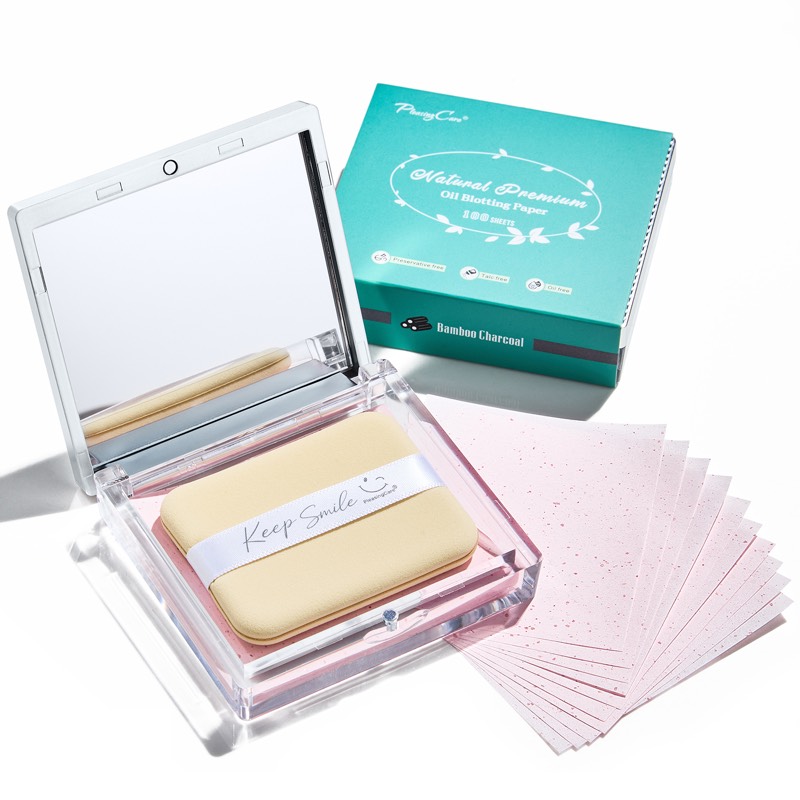
Look for thin, translucent sheets that feel slightly fibrous to the touch. Both bamboo charcoal and green tea variants are excellent choices for daily use. Bamboo charcoal has natural oil-absorbing properties that make it particularly effective at pulling sebum from the skin’s surface. Green tea adds a gentle antioxidant element, which can be soothing if you’re blotting frequently and want a bit of skincare benefit with each touch-up.
Blotting paper removes surface oils only—it doesn’t disrupt or remove your sunscreen layer beneath your makeup. In fact, if you’re wearing a heavy or shiny sunscreen, blotting before applying makeup on top can help your foundation go on more smoothly. Just remember to reapply sunscreen if you’re going to be outdoors for an extended period, since blotting doesn’t affect the SPF layer itself.
That’s a fair question if your powder routine is working for you. But consider this: if you’re happy with your mid-day touch-up results, keep doing what works. But if you’ve noticed your makeup looking heavier, cakeier, or more obvious as the day goes on, it’s worth trying blotting paper just once to compare. Many people who consider themselves powder loyalists try blotting paper and realize the powder was actually making the problem worse—not because powder is bad, but because powder was the wrong tool for the correction moment.
Blotting paper won’t stop your skin from doing what it naturally does—oil production is a normal, healthy function. But it gives you genuine control over how that oil affects your makeup. The next time you feel that familiar shine creeping in mid-afternoon and you’re tempted to reach for your powder compact, pause. Try a sheet of blotting paper instead. Press, wait 3 to 5 seconds, lift, and look. You’ll likely find it’s all you needed.
The technique is simple, but it does require having the right tool on hand. If you don’t already have blotting paper in your bag or at your desk, now’s the time to start keeping some there. It takes up almost no space and it can genuinely save your makeup in situations where powder would only make things worse.
If you’re looking for a good starting point, our Bamboo Charcoal Blotting Paper uses natural activated charcoal to absorb oil effectively without drying your skin. If you prefer something with a gentle skincare element, our Green Tea Blotting Paper is infused with antioxidant-rich green tea extract. Both come in single packs, two-packs, and six-packs so you can keep one at home, one in your bag, and have spares.
For touch-ups on the go, the Mirror Box is worth a look—it fits in most pockets and small purses while giving you a built-in mirror for precise application without needing to hunt for a bathroom or window. And if you prefer something with a built-in applicator already included, the Powder Puff Box comes in bamboo, green tea, and rose variants and might become your new everyday carry.
Explore the full collection to find the setup that fits your routine best.