Matte Makeup Touch-Up with Blotting Paper: Complete Guide

You spent 20 minutes on your makeup this morning. Foundation, concealer, setting powder, the works. You checked every angle before leaving the house. You looked absolutely flawless. And then—three hours later—you catch a glimpse of yourself in a bathroom mirror and your T-zone is doing the inevitable: shining through.

It's frustrating, it's universal, and it's completely solvable. The traditional solution has been to reapply setting powder throughout the day. But if you've ever tried this, you know the problem: layers of powder on top of existing makeup builds up, looks cakey, and can actually emphasize texture and fine lines rather than smoothing them.

There's a better way: blotting paper first, then targeted touch-up only where needed.

Blotting Paper vs Setting Powder: What's the Difference

These two products do fundamentally different things, and understanding the difference changes how you approach touch-ups.

Setting powder adds a new layer of product to your face. It sits on top of your makeup and absorbs oil from the surface. The problem is that it also adds visible product—and if your base makeup is already slightly breaking down, the powder highlights that breakdown rather than fixing it.

Blotting paper removes oil from the surface without adding anything. It absorbs the oil that's sitting on top of your makeup, leaving the makeup itself largely undisturbed. It doesn't add coverage, it doesn't add texture, it doesn't change the color or finish of what you already applied.

Think of it this way: setting powder is like adding a new filter to a photo that's already been filtered. Blotting paper is like removing smudges from the existing filter.

The Correct Order: Blotting Before Touching Up Makeup

This is the most important step most people skip. If you're going to reapply any makeup product, you must blot first.

Here's why: when you apply cream or liquid products over oil, they don't adhere properly. The oil creates a barrier between your skin and the new product, causing the new product to slip, patch, and separate from the rest of your makeup.

The correct sequence for a full touch-up:

  1. Blot with blotting paper (press and lift, don't rub)
  2. Assess what, if anything, needs reapplication
  3. Apply only where needed (often just concealer or a thin layer of foundation, not a full face)
  4. Set lightly with powder only if necessary—and only where you've reapplied

For most people doing an afternoon touch-up, steps 1 and 2 are all that's needed. A couple of presses with blotting paper and you might find your makeup looks fine. You didn't need to reapply anything—you just needed to remove the oil that was making it look like you had.

How to Fix Oily Eyelids Without Ruining Eye Makeup

This is one of the most challenging touch-up scenarios, and it requires a delicate approach.

Oily eyelids are a real problem because they cause eyeshadow to crease, concealer to slide, and eyeliner to transfer. The oil from your T-zone travels upward, and by midday, your carefully blended eye look may be in trouble.

For a quick fix without disturbing eyeshadow:

  1. Use a clean, dry cotton swab (Q-tip) to gently press and lift any creased product back into place
  2. Use blotting paper specifically on the eyelid bone (the area below the brow and above the eyelid crease)—not on the mobile lid itself
  3. If needed, apply a tiny amount of eyeshadow primer only where it has worn off

What NOT to do:

  • Don't press blotting paper directly on your mobile eyelid if you're wearing eyeshadow—you'll smear it
  • Don't try to "fix" creased eyeshadow by adding more eyeshadow on top—it'll look worse
  • Don't use your finger, which adds oil from your skin

For people with chronically oily eyelids, using an eyeshadow primer specifically formulated for oily lids is essential. And consider switching to cream or liquid eyeshadows, which adhere better than powder formulas in oil-prone conditions.

Best Blotting Paper for Makeup Wearers

If you wear makeup daily, your blotting paper needs are different from someone who doesn't. You need:

  • Minimal friction: The paper should absorb oil without disturbing makeup layers. Extra-smooth, thin sheets work best.
  • No residue: Cheap blotting paper can leave behind paper dust or fibers that show up on makeup.
  • Adequate absorption: You need enough capacity to handle a full day of oil production under makeup.

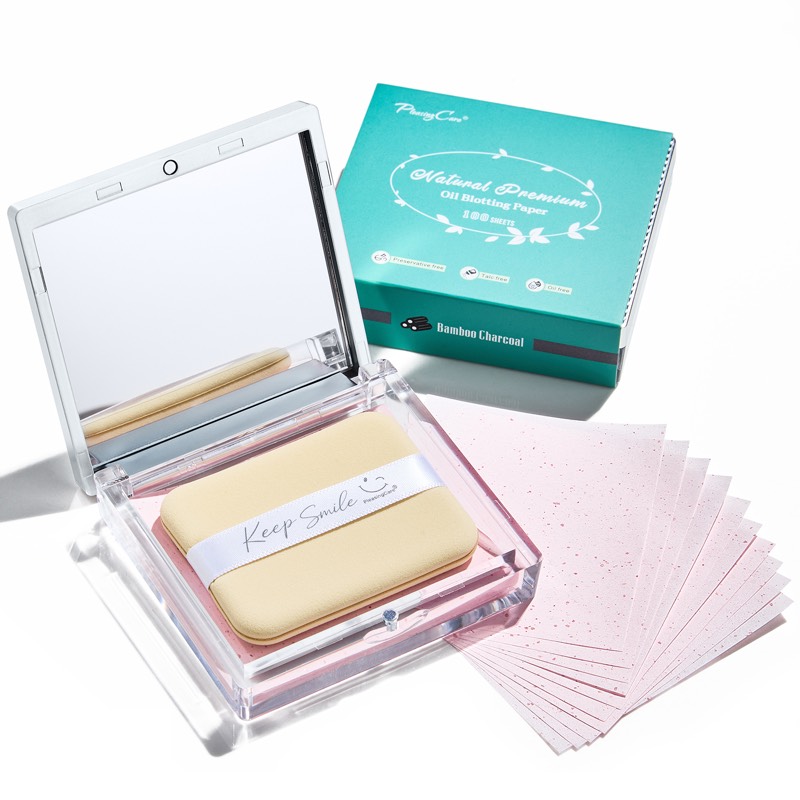
Bamboo charcoal blotting paper is excellent for makeup wearers because it's smooth enough to use over foundation without dragging, absorbs well, and doesn't leave residue.

The powder puff format is particularly well-suited for makeup touch-ups because the built-in applicator makes it easy to press evenly across larger areas (forehead, cheeks) without fine motor control required. You can blot with one hand while looking in a mirror.

Specific Touch-Up Scenarios

Before a presentation or important meeting:

Arrive 15 minutes early. Go to the bathroom. Blot gently. Use a pressed powder or cushion compact only on the T-zone if you feel you need it. A quick lip color refresh. You're done. This takes 2 minutes and the difference in how you feel walking in is real.

After lunch:

Blot before anything else. If you wore lipstick, it probably needs reapplication anyway—remove the remnants with a tissue, moisturize lips, reapply. If you wear lip gloss, this is your moment.

Before photos:

If you're about to be photographed and you're concerned about shine, blot thoroughly 10 minutes before. Oil can take up to 10 minutes to resurface after blotting. Give it that window. Then hold the blot sheet up near your face when you're about to be photographed—oddly, this reduces the flash glare on your face because it absorbs surface shine.

After exercising:

This is a full reset scenario. Remove sweaty makeup remnants with a gentle wipe or cleansing water. Blot. Reapply a light layer of everything. Setting spray is your friend here.

When Powder Is Still the Right Choice

There are times when reapplying powder makes sense:

You have combination skin with a very oily T-zone but dry cheeks: Blot the T-zone, then powder only the T-zone. Leave your cheeks alone.

You're in a very humid environment: Even after blotting, humid air will cause oil to resurface faster. A light powder layer provides a temporary barrier. This is a compromise, not a fix.

You've had to reapply cream products: If you've added new foundation or concealer in some areas, those spots need to be set. You don't powder your whole face—just the spots where you reapplied.

The goal is to use the minimum amount of product necessary to maintain your look. Most midday touch-ups should be: blot, assess, maybe one targeted product, done.

Building Your Touch-Up Kit

For a purse or desk drawer, keep:

  • Blotting paper (50-sheet pack)
  • A pressed powder or cushion compact (optional, for targeted powder use)
  • Lip product of choice
  • Small mirror

That's it. This kit handles 95% of touch-up scenarios. You don't need a full makeup bag. You need a few targeted tools that do specific jobs well.

The most important thing in the kit is the blotting paper. Everything else is optional, but blotting paper is the foundation of any touch-up routine because it determines whether anything else you apply will actually stay.

The Real Secret: Less Is More

Here's the thing most beauty guides don't say clearly: most midday makeup touch-ups that go wrong are the result of too much product, not too little. You don't need to reapply your full face. You need to remove what's gone wrong (oil) and optionally restore what's been lost (a tiny bit of coverage or color).

Start with blotting. Assess. Usually, at that point, you'll realize you need less than you thought. Your makeup probably looks better than you think it does—the oil is making you perceive breakdown that hasn't actually happened.

Blot first. Breathe. Look again. Then decide. Your makeup—and your skin—will thank you.

Frequently Asked Questions

How do I touch up makeup without powder?

Blot first, always. Gently press blotting paper against shiny areas (forehead, nose, chin) and hold for 3-5 seconds, then lift. The paper absorbs oil without adding product or disturbing your makeup. After blotting, assess what actually needs reapplication—you'll often find you need less than you thought. Only reapply concealer or foundation where you've lost coverage, and set lightly with powder only on those spots. This approach avoids the cakey buildup that comes from layering powder over existing makeup.

Blotting paper vs setting powder: which is better for makeup touch-ups?

They do different things. Blotting paper removes oil from the surface of your makeup without adding anything—it absorbs oil that has emerged through your foundation over hours of wear. Setting powder adds a new layer of product that sits on top of your makeup. The problem with powder for touch-ups is that it builds up on top of existing makeup, emphasizing texture and fine lines rather than smoothing them. Blotting paper is the correct first step. After blotting, if you still need more, apply powder only where necessary—not across your whole face.

Should I blot before or after reapplying makeup?

Always blot before reapplying any makeup. When you apply cream or liquid products over oil, they don't adhere properly—the oil creates a barrier that causes the new product to slip, patch, and separate from the rest of your makeup. Blotting removes that barrier. The sequence is: blot thoroughly, assess what needs reapplication, apply only where needed (usually just concealer or a thin layer of foundation), then set with powder only on those spots. This keeps your makeup looking fresh without the cakey look that comes from too much product.

How do I fix oily eyelids without ruining eye makeup?

Use a clean, dry cotton swab (Q-tip) to gently press and lift any creased product back into place. Then use blotting paper specifically on the eyelid bone (the area below the brow and above the crease)—not on the mobile lid itself, which would smear eyeshadow. If you need to touch up eyeshadow, use a small amount of primer or shadow only where it has worn off, then blend carefully. Avoid pressing blotting paper directly on your mobile lid if you're wearing eyeshadow—you'll smudge it. For chronically oily eyelids, consider using an eyeshadow primer formulated for oily lids and switching to cream or liquid eyeshadows, which adhere better.

What is the best blotting paper for makeup wearers?

For daily makeup wearers, you need blotting paper that doesn't disturb your makeup and doesn't leave residue. Bamboo charcoal blotting paper is an excellent choice because it is smooth enough to use over foundation without dragging, absorbs oil efficiently, and doesn't leave paper dust or fibers behind. The powder puff format is particularly well-suited for makeup touch-ups because the built-in applicator makes it easy to press evenly across larger areas like the forehead and cheeks without requiring fine motor control.